
Is TikTok banned in the US
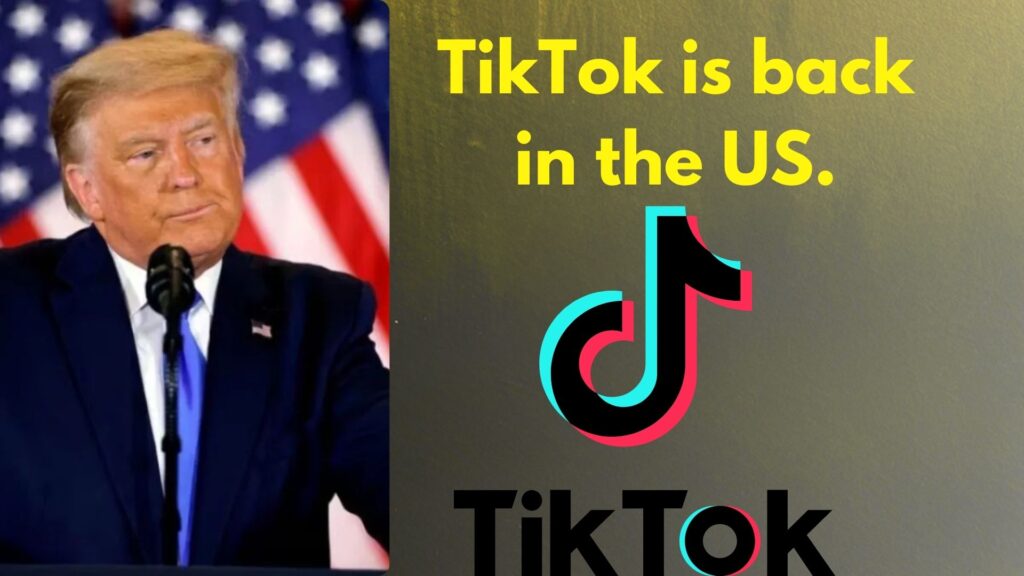 Is TikTok banned in the US As we all know, TikTok was previously banned in the US, but then US President Trump announced that the TikTok app would be available again in the US. Following a Supreme Court directive, TikTok returned to the US on January 19, 2026, bringing great relief to TikTok users. Some changes will also be seen in the TikTok app. Although TikTok has returned to the US, there are some legal guidelines from the Supreme Court regarding its use, and certain conditions that mean not everyone can use TikTok.
TikTok was initially banned in the US because it was owned by the Chinese company ByteDance, and China was allegedly leaking data from TikTok, which could have had a significant impact on the US economy. Therefore, the US didn’t simply lift the ban; surprisingly, it acquired TikTok from China. Now, China only retains a 20% stake in TikTok, while the US holds 80%. The US will operate the app according to its own regulations, and significant updates are expected. Although TikTok is now available in the US, the US has imposed certain conditions and legal restrictions, meaning that not everyone can use it as freely as before.
Why did the US government buy TikTok
The US government had been pressuring the Chinese government for years to sell TikTok, and Chinese lawmakers had even advised giving the company to the US. However, ByteDance, the Chinese company that created TikTok, repeatedly rejected this pressure. Therefore, in 2020, then-President Donald Trump threatened to ban TikTok in the US. After protracted negotiations, in 2024, former President Biden signed legislation that would completely ban TikTok in the US. By 2025, TikTok was completely shut down in the US, triggering a fierce conflict between the US government and China’s ByteDance technology company. Ultimately, China was forced to sell TikTok to the US.
What are the rules for TikTok in the US
TikTok is one of the most popular short video applications and has a large user base. Therefore, certain rules and regulations have been implemented for TikTok. Firstly, TikTok is now entirely under American control; the US-based TikTok USDS joint venture company will manage it, and all updates to the platform will be handled by this company. China will have no control over it. One of the most significant conditions is that children under 13 years of age are not allowed to use TikTok because its short videos can be highly addictive, potentially posing a threat to their future. The US government has stated that TikTok should only be used by individuals who can understand what is legal and illegal, distinguish between appropriate and inappropriate content, and are not susceptible to AI-generated misinformation.
What will happen if TikTok comes to America
If TikTok returns to the US, the main consequence will be that China will no longer be able to steal and leak American user data as it did before. Furthermore, significant changes will be observed among American users. Many Americans were already anticipating TikTok’s return, and if it suddenly reappears, users will likely abandon short-form video platforms like Instagram and YouTube and flock to TikTok’s short videos. Dr. Kokil Jaidka of the National University of Singapore states that even though some people were already using TikTok before its ban, its return after a period of absence will undoubtedly bring about changes in the behavior of American users.
What changes will be made to TikTok
The US has discussed making significant changes to TikTok, addressing shortcomings in the previous version that prevented user data from reaching TikTok quickly and resulted in delayed updates. To address this, and to ensure the US team has access to information about TikTok users, they plan to use a licensed algorithm. The biggest update for users will be that the “For You” page, which previously featured short videos controlled by China, will now be controlled by the US. TikTok also states that it will be integrated with other applications to allow for comparisons between TikTok and other platforms.