
What is GPU
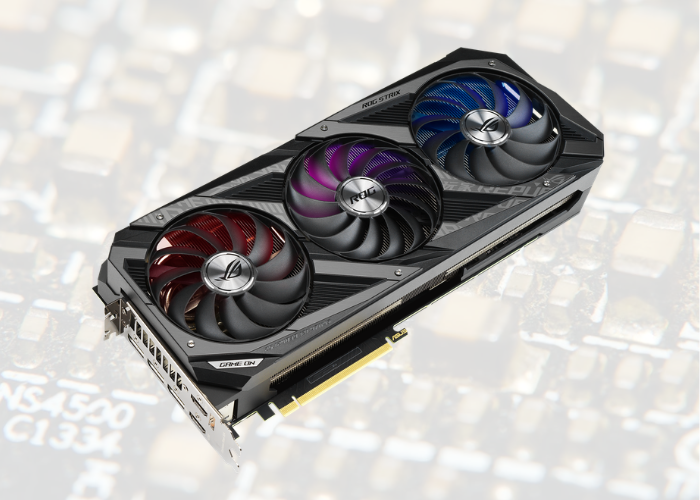 What is GPU? A GPU is a specialised type of processor that is a small but crucial part of a computer. It is a processor that handles the heavy graphic calculations on computers, mobile phones, and other devices, processing graphics to ensure high-quality video, gaming, and other visual content is displayed smoothly and efficiently. In simple terms, it’s the graphics processing brain of the computer.
GPU stands for Graphics Processing Unit, which is an electronic circuit designed to process data quickly. It is used for tasks such as machine learning. As the name suggests, the Graphics Processing Unit means a small machine that processes graphics.
A GPU is a small part inside the CPU. The CPU has to perform many processes, and it performs each task one after another, which slows down its overall performance. Therefore, a GPU is used for high-speed graphic calculations, and it completes multiple graphic tasks simultaneously.
History of GPU
History of GPU: The idea of a GPU arose to improve the existing graphics capabilities of computers. Initially, there was no dedicated GPU; the CPU handled all graphics processing. However, the CPU couldn’t perform graphics calculations quickly and simultaneously; it processed them slowly. Then, in the 1990s, NVIDIA invented the first GPU, the GeForce 256. At that time, it was a single chip that only handled transform and lighting graphics tasks. Its introduction significantly reduced the workload on the CPU.
Earlier GPUs did not have the option for programming; they had pre-set programmes. The early GPU chips themselves decided how much work to do, such as how many pixels to fill or how many lines to draw. The initial 2D GPUs only handled tasks like moving images from one location to another, while 3D GPUs used mostly mathematical formulas and C language code. The CPU processed the video to prepare it for display, and finally, the GPU handled the process of displaying it.
Initially, GPUs were only used for rendering simple images, but today they have evolved to the point where they are used as the engine for training AI in computers. Before the advent of GPUs, in the 1980s and 1990s, CPUs were solely responsible for rendering simple images. Then, in 1999, NVIDIA launched the GeForce 256, the first GPU, which contained thousands of small parallel cores and could perform thousands of processing operations simultaneously. Since then, many advanced GPUs have been launched over time.
What happens inside a GPU
A GPU contains thousands of small cores that can perform multiple calculations simultaneously, allowing it to handle tasks like video editing, gaming, and AI much faster. It also has its own high-speed processing memory and controller, which makes it superior to a CPU for these tasks.
Core: A GPU contains thousands of small cores, which are essential processors such as CUDA Cores and Tensor Cores, designed to work together for parallel computing, allowing it to perform calculations on massive amounts of data simultaneously.
Memory: The GPU’s memory is called Video Random Access Memory (VRAM), which stores only the critical model data for the GPU, providing data access for tasks such as gaming and AI. It includes on-chip L1 and L2 caches, shared memory, and external DRAM (GDDR6, HBM).
Processor block: The GPU contains small, built-in processors called CUDA Cores, which, along with the memory, perform multiple operations on blocks of data.
Pipeline: A GPU pipeline is a processor that processes data, such as 3D pixels, transforms it into an image, and displays it on the screen.
How does a GPU work simultaneously
GPUs can perform multiple tasks simultaneously. A GPU contains thousands of small, specialized cores. These cores work together to process data, dividing the tasks among themselves and performing their respective functions concurrently.
Using the GPU
AI: To train AI, GPUs perform calculations by processing small chunks of data at a consistent speed. AI needs these small, parallel processing steps to complete its tasks, which is something only a GPU can effectively provide.
Video editing: In video editing, GPUs are used for graphics and computationally intensive tasks such as applying effects and rendering, and for smoothly displaying videos in formats like 4K/RAW.
3D video: Using parallel processing, the GPU works in parallel to render 3D graphics, accelerating the processing of images and lighting so that 3D video images and other content appear quickly on the desktop.
Medicine: In the healthcare sector, GPUs are used to accelerate medical imaging procedures. The most common use of GPUs in medicine is for processing MRI, CT scans, and ultrasound images, where the GPU rapidly transforms 2D scans into 3D models. GPUs are also used for various other medical applications, such as drug discovery.
Type of GPU
GPUs are mainly of two types: integrated processors and dedicated processors.
- 1 integrated This integrated processor is already built into the CPU and is based on the RAM memory system. It is designed for laptops and lightweight devices and is used for general tasks such as watching videos, browsing the internet, and playing light games.
- 2 dedicated This is a separate, dedicated graphics card that is installed in the CPU to enhance graphics quality. It has its own dedicated video random access memory (VRAM) and is used for demanding tasks such as video editing, training AI models, and playing high-quality games.
Difference between CPU and GPU
A CPU (Central Processing Unit) is a general-purpose processor that processes all parts of a computer, including both hardware and software. Therefore, its calculation speed is not very high. A GPU (Graphics Processing Unit), on the other hand, is a specialized processor that processes only graphic calculations, and due to its ocused function, its speed is much faster.