
What is mobile network
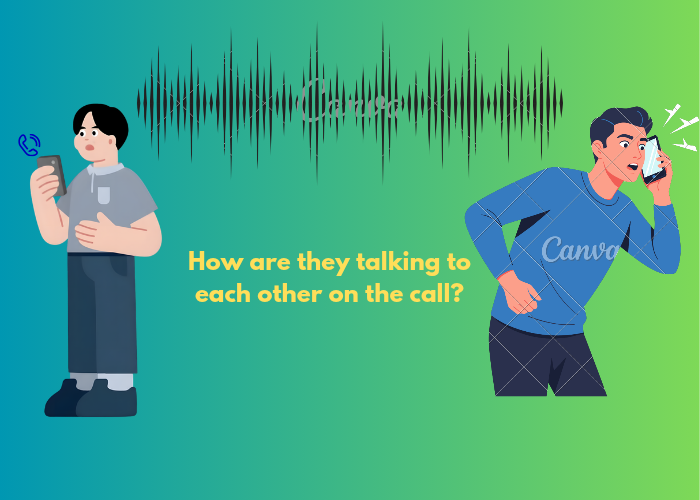 What is mobile network A mobile network is used for sending messages and making calls wirelessly. It transmits signals through the air via radio waves to base stations (towers), and then sends data from one tower to another using optical fiber cables. This network is also used by computers, mobile phones, laptops, etc., to access the internet.
Mobile networks use radio waves to connect one phone to another, but because phones can be quite far apart, other concepts are also used.
A mobile phone contains a microphone that converts the spoken voice into digital form (0s and 1s). Then, the antenna inside the phone converts this digital signal into electromagnetic waves, which are transmitted as radio waves to the cell tower. When the call is received by the other phone, the signal is initially still in digital form. The microphone in that phone then converts this digital signal back into an analog signal, which is then played through the phone’s speaker in a simple, understandable language, allowing the conversation to be heard clearly.
How did the telephone work
The telephone converted sound into electronic signals via a wire, which then traveled to the other telephone. The receiving telephone, with its receiver, converted the electronic signals back into sound and played it through the speaker. This telephone used a microphone, which converted the sound into electronic signals through vibrations, and a speaker that converted these electronic signals back into sound.
In a telephone, the voice is converted into an electronic signal via a wire and transmitted to another telephone. The receiving telephone then converts the electronic signal back into sound and plays it through the speaker. This telephone used a microphone, which converted the voice into an electronic signal through vibrations, and a speaker that converted the electronic signal back into sound.
To transmit the telephone’s electronic signal from one place to another, wires were laid throughout the country. The telephone’s electronic signal first went to a box, which was the telephone’s central connection device. Each telephone had its own separate box. From there, the electronic signal went to the exchange office, which was the central hub for all telephone devices. The exchange office determined which area each telephone’s electronic signal would be routed to. After leaving the exchange office, the electronic signal would then go back to the central connection box of the intended recipient’s telephone. From that box, it would reach the telephone’s microphone, and then the sound would be heard through the telephone’s speaker.
Mobile calling process
Mobile calling uses both wireless and wired technologies. A SIM card is required to make calls from a phone, and the mobile device contains a microphone that converts the voice signal into an electrical signal.
When you make a call from your phone, the call signal initially travels via radio waves to the nearest tower, which is a wireless connection. The antenna on the tower receives these radio waves. While the tower has two antennas, they don’t have the capacity to transmit the signal from one district to another or to a very distant location. Therefore, a fiber optic cable is laid underground from the tower. This cable then sends the signal to the nearest mobile switching center, which is located in every district. This center determines the origin and destination of the call signal, as it holds all the documentation provided when the SIM card was purchased. The mobile switching center then sends the call signal to the nearest tower where the call recipient is located. Upon receiving the signal, the tower transmits it to the recipient’s phone via radio waves. This entire process happens at the speed of light.
This fiber optic cable is spread across the entire world. When making a call from one country to another, the signal travels through this cable. These fiber optic cables are laid both underground within countries and under the sea to connect different countries.
The tower is equipped with two types of antennas: a GSM antenna and a microwave antenna. The GSM antenna is responsible for receiving and transmitting calling signals.
Microwave antenna simple example: If someone is calling from India to America, the Indian person’s SIM card will be registered on the Indian network, and the American person’s SIM card will be registered on the American network. When the Indian person makes the call, the mobile switching center sees that the signal is intended for the American registered network and sends the signal to America. However, if the American person is not in America but in China, then the microwave antenna will redirect the signal to China. The function of a microwave antenna is to receive a signal and transmit it to another location.
How does optical fiber work in making phone calls
Optical fiber, which is made of glass and plastic, is a thin, thread-like wire that transmits signals at the speed of light. Its function is to transmit technologies such as phone calls, data, and the internet over long distances.
This optical fiber cable is spread all over the world. If someone needs to send a signal from one country to another, they use this cable. Radio waves are only used for communication between a phone and a tower, but this optical fiber cable extends over long distances, from one country to another. This cable is connected to towers and laid underground to reach other towers. Optical fiber cables are also laid under the sea to connect different countries. Without this optical fiber cable, it would be impossible to make or receive calls between different countries; communication between countries is made possible through this optical fiber cable.
The difference between 1G, 2G, 3G, 4G, and 5G.
- 1G: The first 1GB device came out in the 1980s, and its speed was very slow, operating at approximately 24 kbps, which is too slow to even send a single image by today’s standards. The phone had an antenna sticking out of the top, which it used to connect to radio waves. Its biggest drawback was that you couldn’t even send text messages; you could only make phone calls.
- 2G: 2G, which was introduced in the 1990s, about 10 years after 1G, didn’t bring about many significant changes. It allowed for making calls and sending messages, and its speed was 64 kbps.
- 3G: It was first released in 2003, and its arrival marked the beginning of mobile internet access. It was the first phone to offer internet connectivity in megabytes, although the speed wasn’t very fast, only about 2 Mbps. With its introduction, services like Google and YouTube became accessible on mobile devices.
- 4G: 4G was first introduced in 2009, and its arrival brought about significant changes to the internet due to its much higher speed, which reached 100 Mbps. A new feature that came with 4G was the ability to make video calls.
- 5G: 5G was introduced in 2020, and it was similar to 4G, only with increased speed. Its speed was 1 gigabit per second. Its new feature was the ability to connect any machine to a 5G phone, such as cars, refrigerators, etc., but these machines also needed to have 5G technology.
Ltd vs VoLtd
When 4G was first introduced, the network performance was good, but there were intermittent disruptions and crackling sounds during calls. Seeing this problem, the government urged for improvements and requested a long-term solution, which came to be known as Long-Term Evolution (LTE). Later, further improvements were made, resulting in VoLTE, where the “Vo” stands for Voice, indicating a significant improvement in voice quality.
How do the army communicate using phones without cell towers
The army doesn’t use regular mobile phones like we do; they have a special type of phone called a satellite phone. This phone doesn’t connect to cell towers; it connects directly to a satellite, and from there, the satellite connects directly to the receiver’s phone.
Satellite phones are not as good as regular phones; the call quality isn’t great, and the sound often cuts in and out. These phones don’t have as many sophisticated components as regular phones, so they can’t be easily tracked. However, hackers can intercept and listen to the conversations, which is why military personnel use coded language when communicating on these phones.